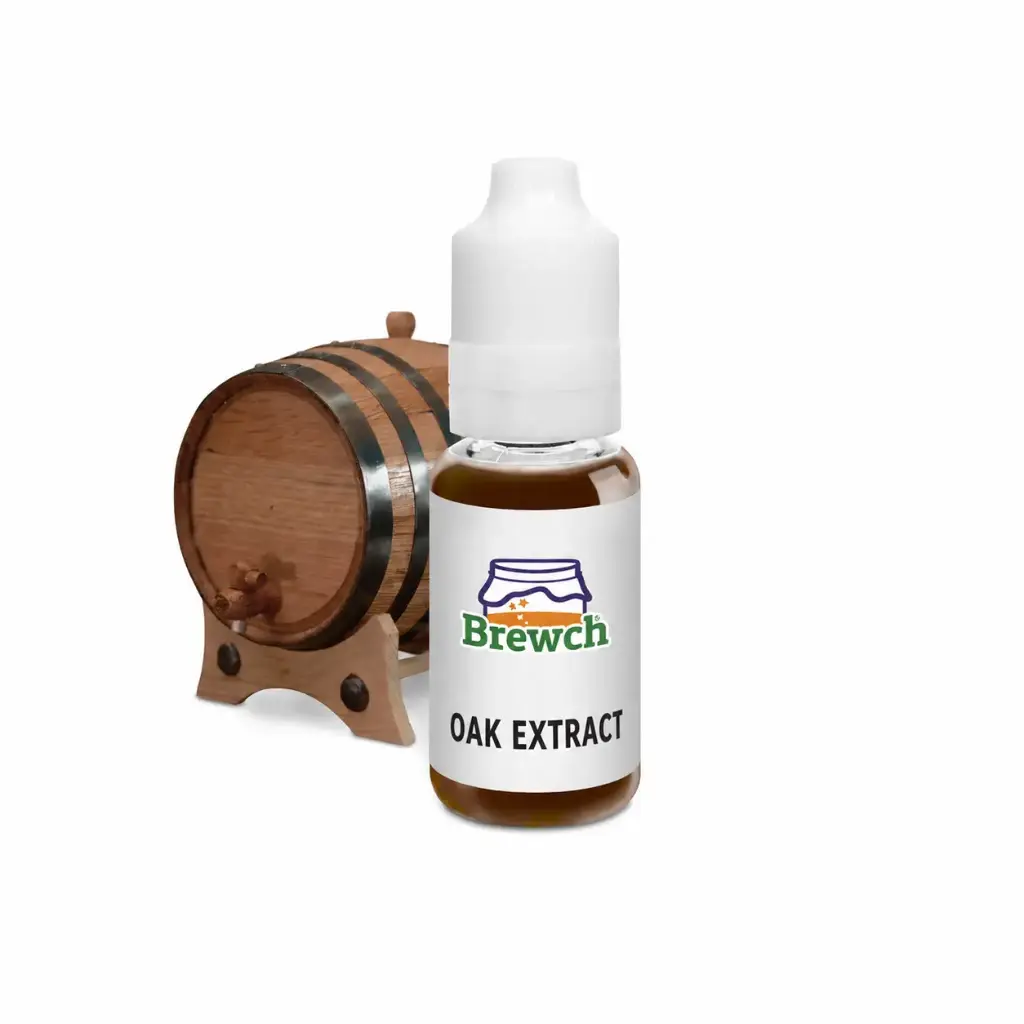
Brewch® Product Description:
Liquid oak extract flavoring concentrate from Brewch delivers all-natural flavor to your beverages, syrups, and cocktails. Water-soluble and heat-stable with no colors, sweeteners, GMOs, sulfites, or allergens. At 2 drops per 100ml, each fl oz of Brewch Oak Extract makes up to 11 gallons of flavored beverage.
Tasting Notes
Opening Notes: Dry wood and vanilla aromatics with smoky undertones reminiscent of aged American oak barrels.
Mid-Palate: Rich, woody body develops with vanilla depth, subtle tannins, and the complexity of traditional barrel aging.
Finish: Smooth, lingering finish with gentle oak tannins, warm vanilla, and sophisticated barrel-aged resolution.
Quick Dosing Reference
Taste is personal, so start low and build: add 1 drop of Brewch Oak Extract per 100ml (about 3.4 fl oz), stir, and taste, then add 1 drop at a time until it tastes right to you. Around 4 drops per 100ml is the ideal, most efficient level; Brewch Oak Extract stretches easily if you want a bolder drink, though some ingredients can mute it.
- Seltzer and sparkling water: 1-3 drops per 100ml
- Cocktails and spirits: 1-4 drops per 100ml
- Mocktails, kombucha, and iced tea: does not stand out on its own against acidic, tea-based drinks; best in a blend, no more than 5 drops per 100ml
- Coffee and lattes: 1-4 drops per 100ml
- Soda: 1-3 drops per 100ml
- Beer and cider: 2-5 drops per 100ml
- Smoothies: 1-3 drops per 100ml
- Simple syrup: 1 part Brewch to 50 parts syrup; use the finished syrup to taste
Brewch Oak Extract is probiotic-safe, sugar-free, and keto-friendly. Once you find your number, write it down, and you'll get the same drink every time. Less is more with Brewch concentrates.
Tasting Notes and How to Use
Aroma: Dry, lightly charred American oak with a subtle smokiness and a vanilla undertone.
Concentration Behavior: 1 drop per 100 ml: a light oak accent. 3-4 drops: full oak character. About 4 drops is the ideal, most efficient level; it stretches easily beyond that, though some ingredients can mute it. Against acidic, tea-based drinks like kombucha it does not stand out on its own; it shines in seltzer, syrups, and cocktails.
Best Pairings: Spirits: bourbon, rye, scotch, brandy, rum. Homebrew styles: stouts, porters, aged mead, barrel-aged ales. Sweeteners: demerara, honey, maple syrup. Bridges: vanilla, caramel, smoked elements, Mocha, Chai Spice. Citrus accents: orange peel (cuts through the dry oak).
Layering Partners: Usually a secondary at 1 part to 3 parts of the primary. + Mocha: barrel-aged porter. + Cookie: dessert whiskey cocktail. + Chai Spice: barrel-spiced cocktail. + Vanilla at about 2:1 Oak to vanilla: a complete barrel profile for zero-proof builds.
Substitutes For: Wood chips in homebrew aging (post-fermentation); oak tincture for cocktail finishing; barrel-aged bitters as a component; oak-forward whiskey character in zero-proof spirits.
Does Not Replace: True barrel aging (micro-oxygenation and ester development) -- it mimics flavor only. Tannin additions in wine. Sweetness -- pair with demerara, honey, or maple.
When To Add: Add to the finished drink and stir. For stouts, porters, mead, and ales, add after fermentation in place of wood chips.
Use With Caution: Some existing notes can mute it; it stretches easily if you want more. Rarely the primary. Orange peel helps cut the dry oak. Choose Mocha for coffee-chocolate depth instead.
Perfect for: grown-up drinks with a speakeasy feel, bringing campfire warmth to old fashioneds and zero-proof whiskey-style drinks, or mountain-cabin depth to aged mead and homebrew -- whenever someone wants something barrel-aged and grown-up, or a drink like sitting by a campfire at a cabin.